
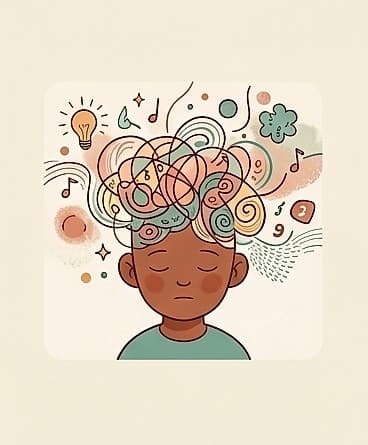
What sensory overload actually looks like in young children
6 min read
Sensory overload happens when a child's brain is taking in more sound, light, touch, or movement than it can process at once, and it can look like two very different things depending on the child.
A meltdown is the loud version: crying, screaming, running, hitting, or otherwise visibly losing control. It's often mistaken for a tantrum, but the key difference is intent: a tantrum usually has a goal (getting a toy, avoiding a task) and responds to negotiation; a meltdown doesn't have a goal at all, it's an overwhelmed nervous system, and negotiating with it tends to make things worse, not better.
A shutdown is the quiet version, and it's the one parents more often miss entirely: going still, unresponsive, avoiding eye contact, or seeming to "check out" of what's happening around them. It can look like defiance or daydreaming when it's actually the same overload, expressed inward instead of outward.
Common triggers worth paying attention to: unexpected loud noises (hand dryers, blenders, crowded rooms), certain textures in clothing or food, bright or flickering lights, being touched unexpectedly, and transitions between activities, especially unplanned ones.
What helps in the moment is different from what helps a tantrum: reducing input rather than adding conversation (moving to a quieter space, dimming lights, removing the immediate trigger) and giving the child time to recover before expecting them to talk about what happened.
If this pattern is frequent and clearly tied to sensory input rather than typical toddler frustration, an occupational therapist who works in sensory processing can help identify specific triggers and build a plan around them.
This guide is general information, not a diagnosis or medical advice. If you're worried about your child, the next step is a conversation with a qualified therapist.
Keep reading
Ready to have someone look with you?
Book a verified therapist in Lagos, or take the 2-minute matching quiz to find the right fit.