
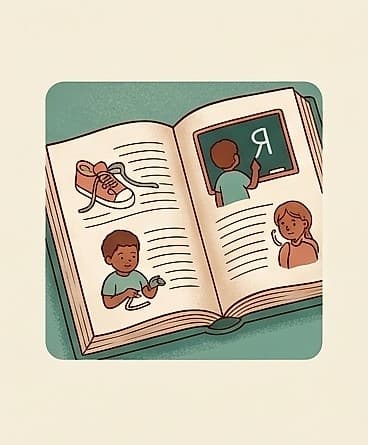
Learning to read is genuinely hard, and most children stumble through parts of it. That alone isn't a sign of anything. Dyslexia-specific signs tend to show up earlier than reading itself, in how a child hears and plays with the sounds inside words.
Before school age: trouble learning nursery rhymes, difficulty noticing that words rhyme, and a family history of reading difficulty (dyslexia runs in families more than most learning differences do).
In early reading years: real difficulty connecting letters to their sounds despite repeated practice, guessing at words from their first letter or the picture rather than sounding them out, reversing letters or numbers past the age when that's typical (occasional reversals up to around age 7 are normal), and reading that's noticeably slower or more effortful than a child's spoken vocabulary would suggest.
A useful gap to watch for: a child who speaks with an age-appropriate (or advanced) vocabulary but whose reading is well behind that. That mismatch (strong oral language, struggling written language) is one of the more reliable early flags.
If several of these are showing up and persisting despite normal classroom instruction, the next step is a formal evaluation, usually through the school or an educational psychologist. Earlier identification means earlier access to the specific, structured teaching approaches that actually work for dyslexic readers. Waiting rarely helps and often just adds frustration.
This guide is general information, not a diagnosis or medical advice. If you're worried about your child, the next step is a conversation with a qualified therapist.
Keep reading
Ready to have someone look with you?
Book a verified therapist in Lagos, or take the 2-minute matching quiz to find the right fit.